










Legal Responsibility of Digital Platforms for Algorithmic Addiction of Minors
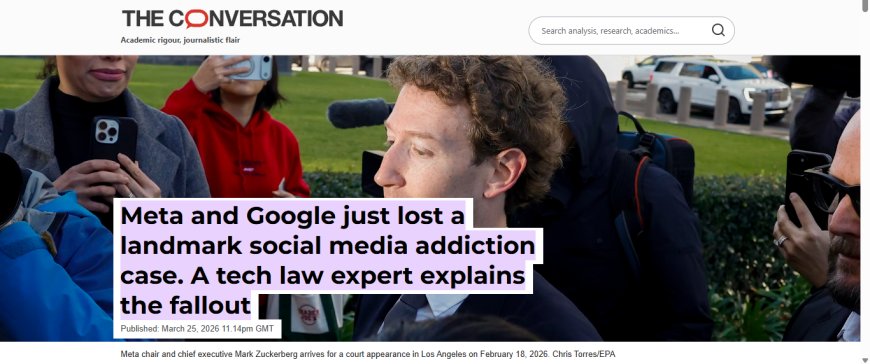
In March 2026, a United States jury delivered a landmark verdict in KGM v Meta and Google, awarding six million dollars in damages on the basis that the addictive design of digital platforms caused measurable psychological harm to a minor user. The ruling represents one of the first judicial recognitions of algorithmic addictive design as an independent ground for civil liability distinct from platform content liability.¹


Legal Responsibility of Digital Platforms for Algorithmic Addiction of Minors: Between the Logic of Innovation and the Imperative of Protection
A Comparative Legal Analysis in Light of KGM v. Meta and Google and Its Implications for Lebanese Law
In March 2026, a United States jury delivered a landmark verdict in KGM v. Meta Platforms Inc. and Google LLC, awarding six million dollars in damages on the basis that the addictive design of digital platforms caused measurable psychological harm to a minor user. The ruling represents one of the first judicial recognitions of algorithmic addictive design as an independent ground for civil liability, distinct from platform content liability.
This article examines the legal significance of that decision through a comparative analytical framework structured around three complementary dimensions: (1) the evolving international normative framework governing children’s digital protection, including the Convention on the Rights of the Child, OECD Artificial Intelligence Principles, and the European Digital Services Act; (2) the current Lebanese legal regime governing civil liability, consumer protection, and child protection together with its structural regulatory gaps; and (3) the emerging doctrinal tension between the commercial logic of engagement-driven platform architectures and the legal logic of protecting minors from algorithmically engineered behavioral dependency.
The article further evaluates whether traditional civil law standards, particularly the bonus pater familias duty of care and parental responsibility doctrines, remain adequate in environments shaped by opaque recommendation systems intentionally designed to maximize user retention. It argues that algorithmic transparency, responsible design obligations, and revenue-linked accountability mechanisms should evolve from ethical guidelines into enforceable legal duties.
I. Introduction: Algorithmic Environments and the Transformation of Legal Accountability
Over the past decade, the relationship between minors and digital platforms has undergone a structural transformation. Social media platforms are no longer neutral communication infrastructures; they increasingly function as behaviorally engineered environments designed to capture attention, extend engagement time, and influence interaction patterns through predictive recommendation systems (Zuboff, 2019).
Against this background, the March 2026 jury verdict in KGM v. Meta Platforms Inc. and Google LLC represents a doctrinal turning point in platform liability jurisprudence. For the first time, addictive interface architecture itself—not user-generated content—was accepted as a primary basis for civil responsibility.
This development raises critical questions for comparative legal systems, particularly those that have not yet adopted comprehensive digital governance frameworks. Can civil law jurisdictions recognize algorithmic addictive design as a legally actionable defect? How should responsibility be distributed between digital platforms and parents in environments intentionally engineered to influence minors’ behavioral autonomy?
This article addresses these questions through a comparative doctrinal analysis combining international legal norms, European regulatory developments, and Lebanese civil liability principles.
II. The Case of KGM v. Meta and Google: Facts and Legal Significance
The case concerned a plaintiff who developed addictive behavioral patterns toward YouTube and Instagram from early childhood due to platform features such as infinite scrolling, algorithmic recommendation systems, and autoplay functions designed to maximize engagement.
Importantly, the plaintiff’s legal strategy focused not on harmful content but on defective platform design architecture. This approach effectively circumvented the immunity framework established under Section 230 of the Communications Decency Act (1996).
Internal corporate documentation disclosed during litigation revealed prior knowledge by platform developers of psychological risks associated with engagement-optimization strategies targeting minors. The jury concluded that both Meta and Google had acted negligently in designing their platforms and failed to warn users about foreseeable harms.
This judgment marks a decisive shift from content-based liability toward architecture-based liability in platform governance.
III. The International Legal Framework Governing Algorithmic Protection of Minors
International law already provides normative foundations capable of supporting liability frameworks addressing algorithmic harms affecting minors.
The Convention on the Rights of the Child (1989) establishes the principle of the best interests of the child as a primary consideration in all actions affecting minors. Article 17 further obliges states to protect children from harmful material disseminated through communication media.
At the European level, the Digital Services Act (Regulation (EU) 2022/2065) represents the most advanced regulatory framework currently governing systemic platform responsibility. It requires very large online platforms to assess systemic algorithmic risks, increase recommender-system transparency obligations, and implement safeguards protecting minors.
Similarly, the OECD Principles on Artificial Intelligence (2019) establish accountability, transparency, and harm-prevention obligations applicable to algorithmic systems affecting individuals and society.
IV. Lebanese Law: Existing Legal Foundations and Structural Regulatory Gaps
Lebanon currently lacks a comprehensive regulatory framework governing digital platforms and recommender algorithms.
Although Law No. 81/2018 formally addresses personal data protection, its implementation remains incomplete due to the absence of an operational supervisory authority.
Nevertheless, general tort liability principles under Articles 122–134 of the Lebanese Code of Obligations and Contracts provide a potential legal basis for platform responsibility where fault, damage, and causation can be demonstrated.
Algorithmic architectures intentionally designed to maximize behavioral dependency among minors may qualify as gross negligence under Lebanese jurisprudence, particularly where companies possessed prior knowledge of associated psychological risks.
Additional liability grounds may arise under the Consumer Protection Law No. 659/2005, which requires disclosure of material risks associated with products and services. Law No. 422/2002 concerning juvenile protection may also be interpreted dynamically to include harmful digital environments intentionally structured to generate behavioral dependency.
V. Parental Responsibility and the Limits of the Bonus Pater Familias Standard
Lebanese civil law traditionally evaluates parental supervision through the objective behavioral benchmark known as the bonus pater familias standard.
However, applying this standard in algorithmically engineered environments raises complex doctrinal challenges. Where platforms deliberately conceal internal research concerning behavioral risks while presenting their services as safe, the causal relationship between parental conduct and resulting harm becomes legally attenuated.
Platform responsibility therefore arises directly from intentional behavioral architecture design choices capable of generating foreseeable harm.
VI. Commercial Logic Versus the Logic of Protection
Platform operators frequently argue that adolescent mental health outcomes cannot be attributed to a single digital application. While partially valid, this argument does not address the legal implications of deliberately designing engagement-maximization systems targeting psychologically vulnerable users.
Concealment of internal research demonstrating harm to minors exceeds the boundaries of legitimate commercial strategy and enters the domain of structured manipulation.
A decisive distinction must therefore be drawn between recommendation systems intended to improve user experience and systems designed to exploit psychological vulnerabilities independently of user interests.
VII. Toward Enforceable Legal Ethics of Algorithmic Design
Effective protection of minors in digital environments requires transforming algorithmic ethics into enforceable regulatory obligations.
These obligations include:
- Algorithmic transparency toward regulators
- Responsible design obligations
- Preventive protection frameworks
- Revenue-linked accountability mechanisms
Such measures reflect the emerging transition from voluntary corporate governance models toward enforceable algorithmic responsibility regimes.
VIII. The Possibility of Litigation in Lebanon
Although Lebanese courts may theoretically exercise jurisdiction where harm occurs within national territory, enforcement challenges remain significant due to the absence of judicial cooperation agreements with the United States.
Unlike Anglo-American legal systems, Lebanese civil procedure does not provide discovery mechanisms capable of compelling disclosure of internal corporate documentation (Lebanese Code of Civil Procedure, art. 203).
Nevertheless, litigation remains legally possible based on general tort principles and consumer protection obligations.
IX. Conclusion
The verdict in KGM v. Meta Platforms Inc. and Google LLC represents a turning point in the evolution of global platform accountability doctrine.
While Lebanese law contains theoretical foundations capable of supporting similar claims, it lacks the procedural infrastructure required for effective enforcement.
Protecting minors in digital environments does not require restricting technological innovation but ensuring that innovation operates within a framework prioritizing human dignity over engagement-driven optimization.
References
- Communications Decency Act, 47 U.S.C. § 230 (1996).
- Convention on the Rights of the Child, Nov. 20, 1989.
- KGM v. Meta Platforms Inc. & Google LLC, U.S. Superior Court (2026).
- Lebanese Code of Civil Procedure, art. 203.
- Lebanese Code of Obligations and Contracts, arts. 122–134.
- Lebanese Code of Obligations and Contracts, art. 123.
- Lebanese Consumer Protection Law No. 659/2005.
- Lebanese Law No. 422/2002 (Protection of Juveniles).
- Lebanese Law No. 81/2018 (Electronic Transactions and Personal Data).
- OECD. (2019). Recommendation of the Council on Artificial Intelligence.
- Regulation (EU) 2022/2065 of the European Parliament and of the Council (Digital Services Act).
- Zuboff, S. (2019). The age of surveillance capitalism. Profile Books.
Specialized in Private Law, Professor of Law at the Lebanese University; Legal consultant; Co-director of Cyber Crime Center created by the Lebanese Information Technology Association (LITA); President of (LITA); permanent member of the Data Security Panel” at the World Federation of Scientists, Geneva.
What's Your Reaction?
 Like
1
 Dislike
0
 Love
1
 Funny
0
 Angry
0
 Sad
0
 Wow
1