







Women and Their Civil Rights: A Pillar of Reform and Social Development On the Occasion of International Women’s Day 2026
The United Nations officially recognized International Women’s Day in 1977 as a result of the activities of labor movements that emerged in the early twentieth century in North America and Europe. Celebrated around the world on March 8 each year, this day represents an opportunity to reaffirm the importance of women’s role in development and the building of societies, and to highlight the ongoing efforts to achieve equality and justice between men and women. As 2026 arrives, the discussion is renewed about the close relationship between women’s empowerment and the advancement of societies. It has become clear that granting women their full civil rights not only achieves justice, but also opens wide horizons for social and economic reform and progress.

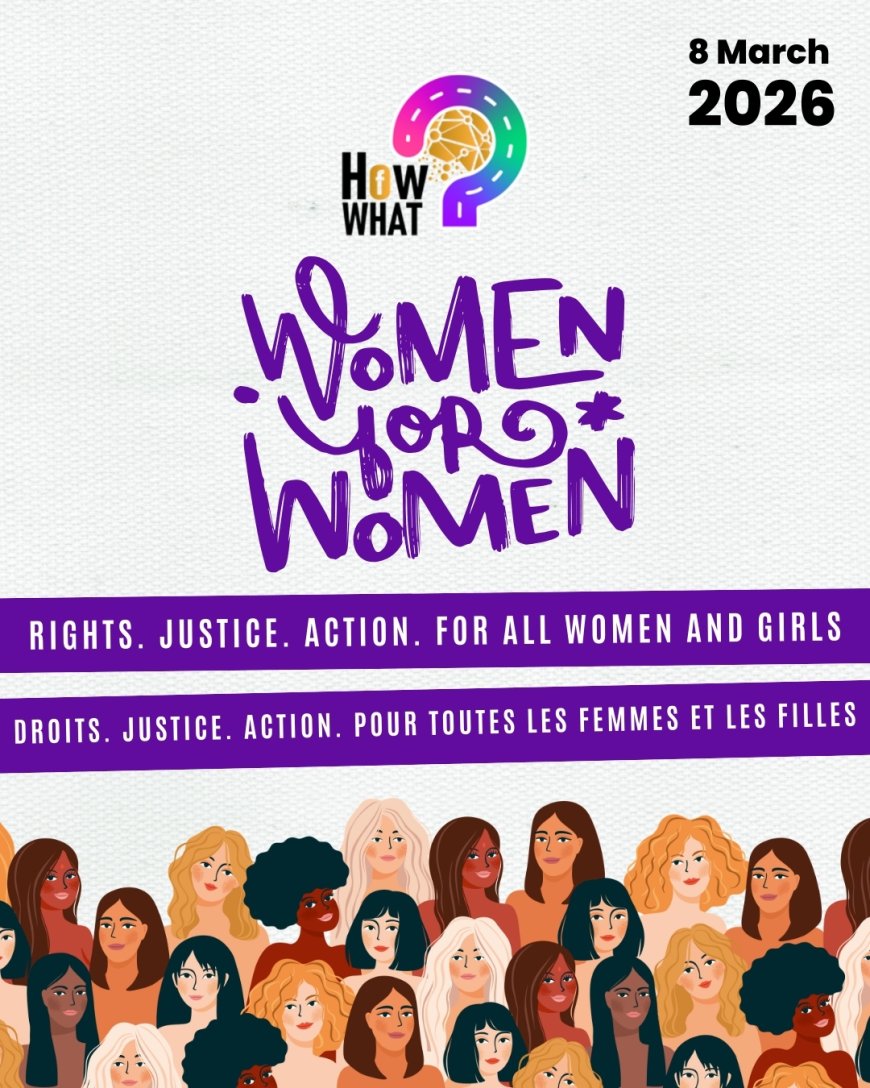
At the global level, development experiences confirm that the full participation of women in public life is one of the most important factors in the prosperity of societies. Reports from the World Bank and the United Nations Development Program have shown that countries that strengthened women’s participation in the labor market and in decision-making processes experienced higher levels of economic growth and social stability. Studies by the United Nations Educational, Scientific and Cultural Organization (UNESCO) also indicate that educating girls has a direct impact on improving public health, reducing poverty rates, and strengthening opportunities for sustainable development.
Women’s access to civil rights—such as the right to education, employment, political participation, and equality before the law—makes them essential actors in the process of social reform. Educated and economically empowered women contribute to the development of institutions, support the national economy, and play a central role in raising future generations with values of citizenship, justice, and participation. Their presence in decision-making positions also strengthens public policies that respond to the needs of different segments of society.
Examples from Around the World of the Progress of Women’s Rights
In recent decades, many countries have witnessed remarkable progress in the field of women’s rights, which has positively influenced the structure of society and the economy.
In Rwanda, for example, women now represent more than 60 percent of members of parliament—the highest proportion in the world and a global precedent. This strong political presence has contributed to strengthening social and educational policies and supporting development and national reconciliation programs after years of conflict.
In Scandinavian countries such as Norway and Sweden, policies that promote gender equality—such as balanced maternity and paternity leave and equal opportunities in the labor market—have led to high levels of social and economic well-being. These countries have become global models for social justice.
The Development of Women’s Rights in the Arab World
The Arab world has also witnessed important steps toward strengthening women’s rights in recent years. Although some of these steps remain initial stages and are not yet widely implemented, they represent progress in the right direction.
In Saudi Arabia, women gained the right to drive in 2018, and their participation has expanded in the labor market and across several economic and administrative sectors.
In Tunisia, legislation related to women’s rights is among the most progressive in the region, with laws reinforcing the principle of gender equality and providing broader legal protection for women in employment and family matters.
The United Arab Emirates has taken significant steps toward women’s empowerment. Women’s representation in the Federal National Council has reached 50 percent, alongside their increasing presence in leadership positions in government and the economy.
In Morocco, reforms to the Family Code have improved women’s rights in marriage, divorce, and child custody, marking an important step toward greater justice within the family, even if implementation is not yet uniform across all regions.
In Jordan, women’s participation in the labor market and higher education has expanded, and governmental and community initiatives have been launched to support women’s entrepreneurship and economic empowerment.
The Lebanese Context: Reality and Challenges
In Lebanon, women have achieved significant accomplishments over the past decades in the fields of education, employment, and participation in public life. The rate of girls’ education has increased notably, and Lebanese women have become strongly present in fields such as medicine, education, media, entrepreneurship, and civil society. Women have also played prominent roles in social and humanitarian initiatives, particularly in responding to the economic and humanitarian crises Lebanon has experienced in recent years.
From a legal perspective, Lebanon has witnessed important developments in the protection of women’s rights. In 2014, the country adopted a law to protect women and other family members from domestic violence, with subsequent amendments strengthening legal protection mechanisms for women. Lebanon has also joined the Convention on the Elimination of All Forms of Discrimination against Women (CEDAW), adopted by the United Nations, reflecting its principled commitment to promoting gender equality.
Nevertheless, women in Lebanon continue to face several challenges in achieving full equality in civil rights. Personal status laws, which fall under multiple religious authorities, still limit certain rights related to marriage, divorce, and child custody. Furthermore, women’s representation in political life remains below expectations, despite their growing presence in civil society and professional sectors.
Women as a Force for Social Reform
Empowering women and granting them their civil rights does not merely mean doing justice to half of society; it also means unlocking enormous potential that can contribute to reforming societies. When women are given opportunities for education, work, and participation, they become a central element in achieving social balance and strengthening stability.
In societies that have successfully enhanced women’s participation—such as the Scandinavian countries and some emerging economies—policies supporting gender equality have contributed to strengthening innovation, economic growth, and quality of life. Reports from the World Economic Forum have shown that reducing the gender gap directly contributes to increasing productivity and achieving more inclusive development.
In the Lebanese context, empowering women could serve as a key gateway to strengthening social and economic reform. Lebanese women possess high levels of education and broad professional expertise, making them essential partners in the process of national recovery. Providing a legal and social environment that supports women’s participation could contribute to strengthening economic and social stability and support the path toward sustainable development in the country.
Toward a More Balanced and Just Society
Celebrating International Women’s Day should not be limited to honoring women’s achievements. It should also be an opportunity to renew commitment to achieving equality and strengthening women’s rights in all fields. A society that guarantees the rights of its women unlocks enormous human potential that contributes to building a more stable and just future.
Empowering women is not only a women’s issue; it is a developmental and humanitarian issue that concerns the future of societies as a whole. Every step taken toward strengthening women’s rights is also a step toward a more balanced society—one better able to confront challenges and build a better future for the coming generations.
What's Your Reaction?
 Like
0
 Dislike
0
 Love
0
 Funny
0
 Angry
0
 Sad
0
 Wow
0